
Introduction
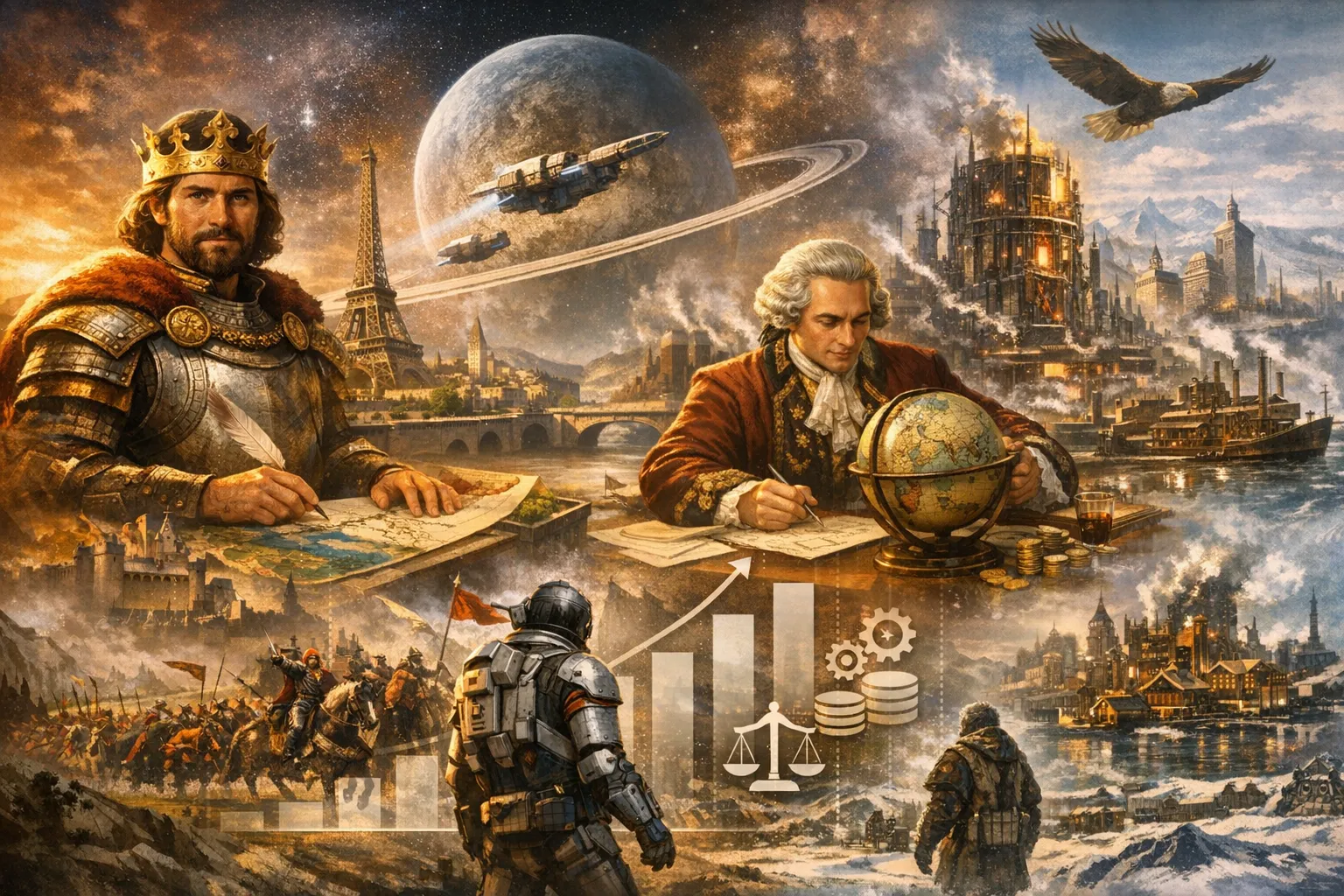
The strategy game landscape continued to expand in 2026, as players increasingly seek experiences that demand more than quick reflexes — they want deep planning, long-term thinking, and systems mastery. Empire‑building games sit at the crossroads of economy management, diplomacy, warfare, and urban planning — ideal for thinkers who enjoy multi-layered decision-making. In 2026, the genre is more varied than ever: remasters and expansions breathe new life into classics while fresh titles experiment with social mechanics and moral complexity. Below is a curated list of the top empire‑building games for thinkers in 2026, with analysis on why each is worth your time.
1. Civilization VI: Renaissance & Beyond (Expansion + Community Patch) — Long-term Strategy and Macro Depth
Why it still stands out
Despite a decades-long run, Civilization VI — refreshed by major expansions and community-driven patches in 2025–2026 — remains the genre’s benchmark. It’s not just about buildings and tech trees; Civ VI rewards foresight across centuries. Early decisions can echo into the late game and beyond, delivering that rare “grand sweep” satisfaction.
2026 highlights
- A refined policy system lets you tune your civ’s governance toward long-term goals.
- Community-driven AI improvements add depth to diplomacy and trade behaviors.
- Community content packs formalize popular mods into official options, increasing replayability.
Who should play?
Players who enjoy slow-burn strategy, layered planning, and the thrill of watching a civilization you shaped evolve across millennia.
2. Age of Empires IV: Dominion (2026 Update) — When Speed Meets Strategic Depth
Why it’s compelling
Age of Empires IV keeps the classic RTS pace but deepened its economic and logistical systems in the 2026 “Dominion” update. It rewards both quick tactical thinking and multi-step strategic planning.
2026 highlights
- Dynamic trade routes: protecting or expanding trade lanes has strategic consequences.
- Enhanced commander progression: leaders and armies evolve along unique paths linked to national policies.
Who should play?
RTS fans who want rapid action but also crave supply-chain thinking and long-term strategic trade-offs.
3. Total War: Empire of Hearts (2026 DLC) — Politics, Intrigue, and Massive Battles
Strengths
Total War continues to blend campaign management and sweeping real-time battles. The 2026 “Empire of Hearts” DLC focuses more on internal politics — marriages, loyalties, betrayals — and how those human factors shape military effectiveness.
2026 highlights
- Personal relationships between nobles influence morale and loyalty.
- Large-scale battle optimizations permit more units with richer interactions on the field.
Who should play?
Players who love combining battlefield tactics with court intrigue and political maneuvering.
4. Stellaris: Empires Reforged (2026) — Galactic Empire-Building for Imaginative Minds
Why it’s essential
Stellaris remains the go-to for empire-building on a galactic scale. The “Empires Reforged” update deepens cultural mechanics, AI governance, and ecological diversity so that each civilization feels philosophically and mechanically distinct.
2026 highlights
- Ethics overhaul: moral choices have larger diplomatic and internal impacts.
- Federation ecosystems: new federation mechanics create layered alliances and shared interests.
Who should play?
Players who want to think cosmically — shaping ethics, policies, and the ideological direction of entire star-spanning civilizations.
5. Europa Universalis IV: Global Realms (2026 Expansion) — Mastering Diplomacy and Trade
Why it matters
Europa Universalis IV is the paradise for diplomacy and economic players. The 2026 expansion emphasizes negotiation, economic manipulation, and colonial operations at historical scale.
2026 highlights
- Trade consortiums: new cooperative/competitive trade mechanics between nations.
- Improved trade map UI to make strategic planning more intuitive.
Who should play?
Those who enjoy meticulous, long-term planning — manipulating trade, treaties, and influence to dominate the world stage.
6. Frostpunk 2 — Leadership Under Pressure (2026 Release) — Moral Calculus in a Harsh World
Why it’s here
Frostpunk 2 challenges players with governance decisions under extreme scarcity. Beyond engineering and architecture, it’s about governing people: policies are moral equations with real social consequences.
2026 highlights
- Authority and trust systems force trade-offs between repression and consent.
- A dynamic narrative that adapts to policy choices, producing varied endings based on governance style.
Who should play?
Strategists who want to test ethical leadership under pressure, balancing human costs against survival.
7. Anno 1800: Global Lines (2026 Update) — Production Chains and Urban Optimization
Why it remains attractive
The Anno series is unmatched for production chains and urban planning. The 2026 “Global Lines” update expands intercontinental logistics and industrial-scale planning.
2026 highlights
- New supply-chain map tools for optimizing sea and rail logistics.
- Large-scale urban scenarios that force players to weigh industry, environment, and citizen welfare.
Who should play?
Players who love optimization, logistics puzzles, and the satisfaction of a well-tuned industrial ecosystem.
8. Crusader Kings III: Dynasties Ascendant (2026 Expansion) — Dynastic Power and Political Theater
Why it’s compelling
Crusader Kings III reframes empire-building around family, legacy, and personal politics. The 2026 expansion enhances heir management, education, and dynasty-building mechanics.
2026 highlights
- “Heircraft” systems deepen how you raise successors through education, alliances, and influence.
- Expanded court intrigue mechanics let players orchestrate subtle, generational strategies.
Who should play?
Those who relish long-term roleplay where family dynamics, marriage, and personality are strategic tools.
9. RimWorld: Colony Architect (2026) — Small-Scale Empire-Building through Behavior
Why it belongs on the list
RimWorld remains a masterclass in emergent narrative. The 2026 update deepens AI personality networks and social mechanics so colonies feel more alive and unpredictable.
2026 highlights
- Emotional lattice: characters’ emotional states interlink and influence group dynamics over time.
- Deeper skill systems create meaningful specialization across colony roles.
Who should play?
Players who enjoy emergent drama, micro-management, and thinking like a psychologist, engineer, and logistician at once.
10. Banished: New Horizons (Remaster + Expansion) — Minimalism That Demands Thought
Why it’s notable
Banished is a concentrated lesson in resource management and urban planning. The 2026 remaster preserves its minimalist approach but expands ecological and seasonal complexity.
2026 highlights
- More intense seasonality and ecosystem interactions that directly affect survival.
- Enhanced citizen tracking for age, occupation, and productivity over time.
Who should play?
Players who want pure management challenges without warfare — focus on planning, preservation, and sustainable growth.
Why Empire-Building Still Resonates in 2026
- Reward for long-range thinking: In a landscape of quick consumable experiences, empire-building games reward forecasting, patience, and compounding strategy.
- Personalization and narrative: Many titles now blend branching storytelling and character systems, making each empire feel uniquely personal.
- Community and modding: Developers increasingly embrace modder creativity, turning community ideas into official content that extends longevity.
- Experimental variety: The concept of “building an empire” now spans city-states, migrating caravans, and star-faring civilizations — offering diverse mental challenges.
Choosing the Right Game for You
- Do you prefer fast tempo or marathon planning? RTS like Age of Empires suits speed; Civ or EU4 suits slow, systemic play.
- Do you enjoy diplomacy or internal management? EU4 and Stellaris lean global; CK3 focuses on dynastic politics.
- Do you want action or systems? Banished, RimWorld, and Frostpunk emphasize systems over action.
- Be ready to learn: EU4, Stellaris, and CK3 have steep learning curves — patience and reading guides pay off.
Conclusion
In 2026, empire-building remains a rich, varied genre. Whether you want to shepherd a medieval dynasty, optimize industrial supply chains, or shape the ethics of a galactic empire, there’s a game tailored for thoughtful players. What unites them is the mental reward: strategic, cascading consequences that make success feel earned. Empire-building games continue to be a playground for intellect, creativity, and long-term planning — and in a world of instant gratification, that kind of depth is still invaluable.