






Factorio is often described as a factory-building or automation game, but this shorthand fails to capture its deeper structural achievement. The game is not about building efficient systems in a vacuum; it is about confronting and resolving logistical friction. Every conveyor belt bottleneck, power shortfall, and resource imbalance is a deliberately engineered obstacle designed to provoke analytical restructuring.
Rather than offering friction as punishment, Factorio embeds it as the primary engagement mechanism. Progress is not defined by expansion alone, but by the player’s evolving ability to diagnose and eliminate systemic inefficiencies. This article examines how logistical friction functions as the cognitive engine of the game.
1. Manual Crafting and the Introduction of Constraint
The early game begins with manual mining and crafting.
Production is slow, inputs are scarce, and crafting queues are short.
This deliberate inefficiency introduces constraint as a constant presence. Players immediately recognize that manual throughput cannot scale, establishing automation not as luxury but necessity.
2. Conveyor Belts as Spatial Logic
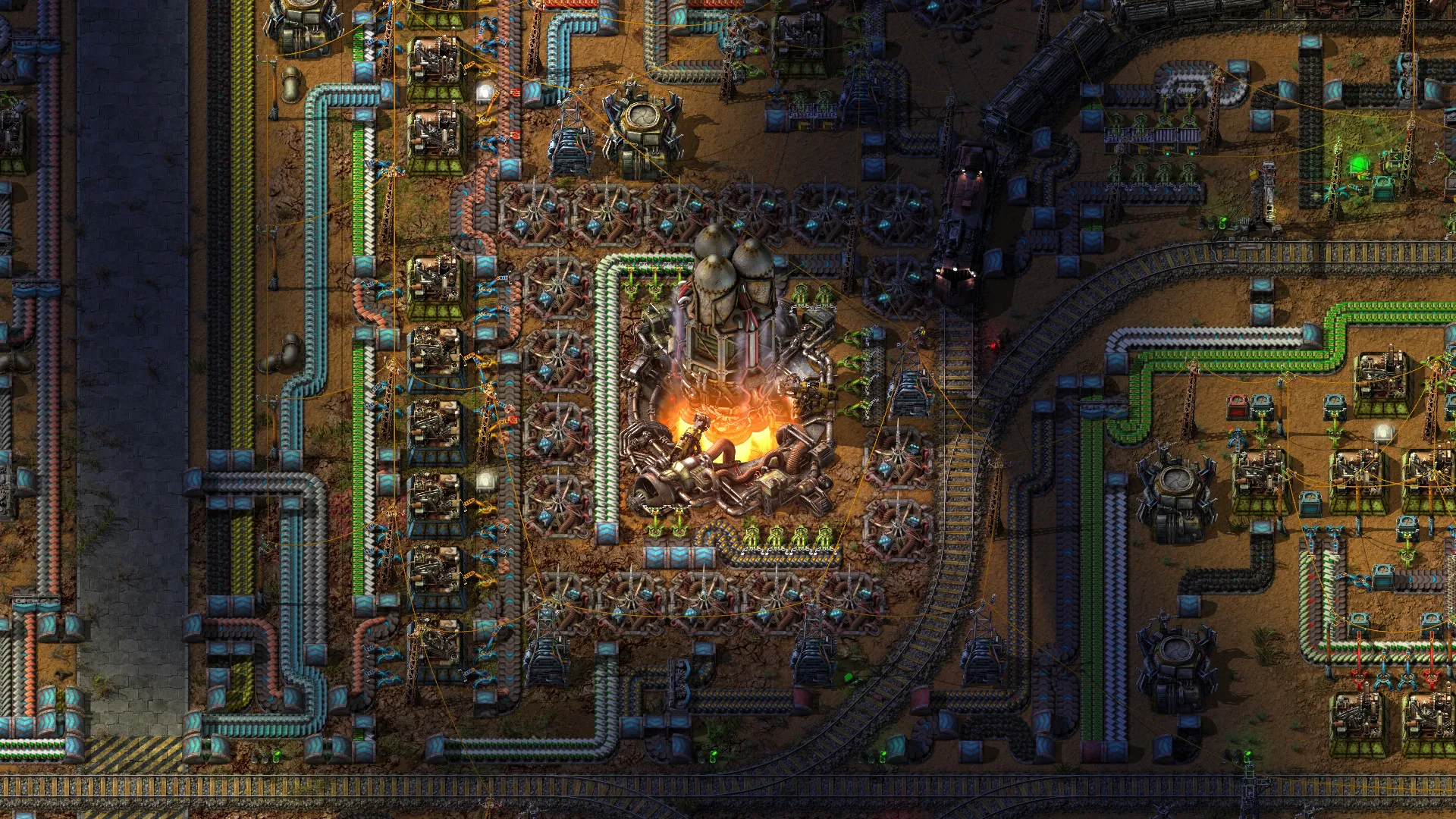
The introduction of belts transforms production from abstract numbers into spatial reasoning.
Items must travel physically from extraction to processing to assembly.
Visible throughput
Belts externalize production logic, allowing players to see congestion rather than infer it.
Spatial arrangement becomes synonymous with efficiency.
3. Bottlenecks as Feedback Mechanisms
Every stalled assembler signals imbalance.
Too little iron plate, insufficient copper cable, or misaligned inserters create production delays.
Systemic transparency
The game rarely hides inefficiencies.
Instead, it exposes them visually and audibly, turning problems into readable data.
4. Power Grids and Cascading Failure
Electricity networks introduce interdependence.
Steam engines, solar arrays, and accumulators must balance consumption.
Chain reaction risk
A power deficit does not affect one machine—it destabilizes the entire network.
Infrastructure must scale proportionally.
5. Pollution as Environmental Consequence
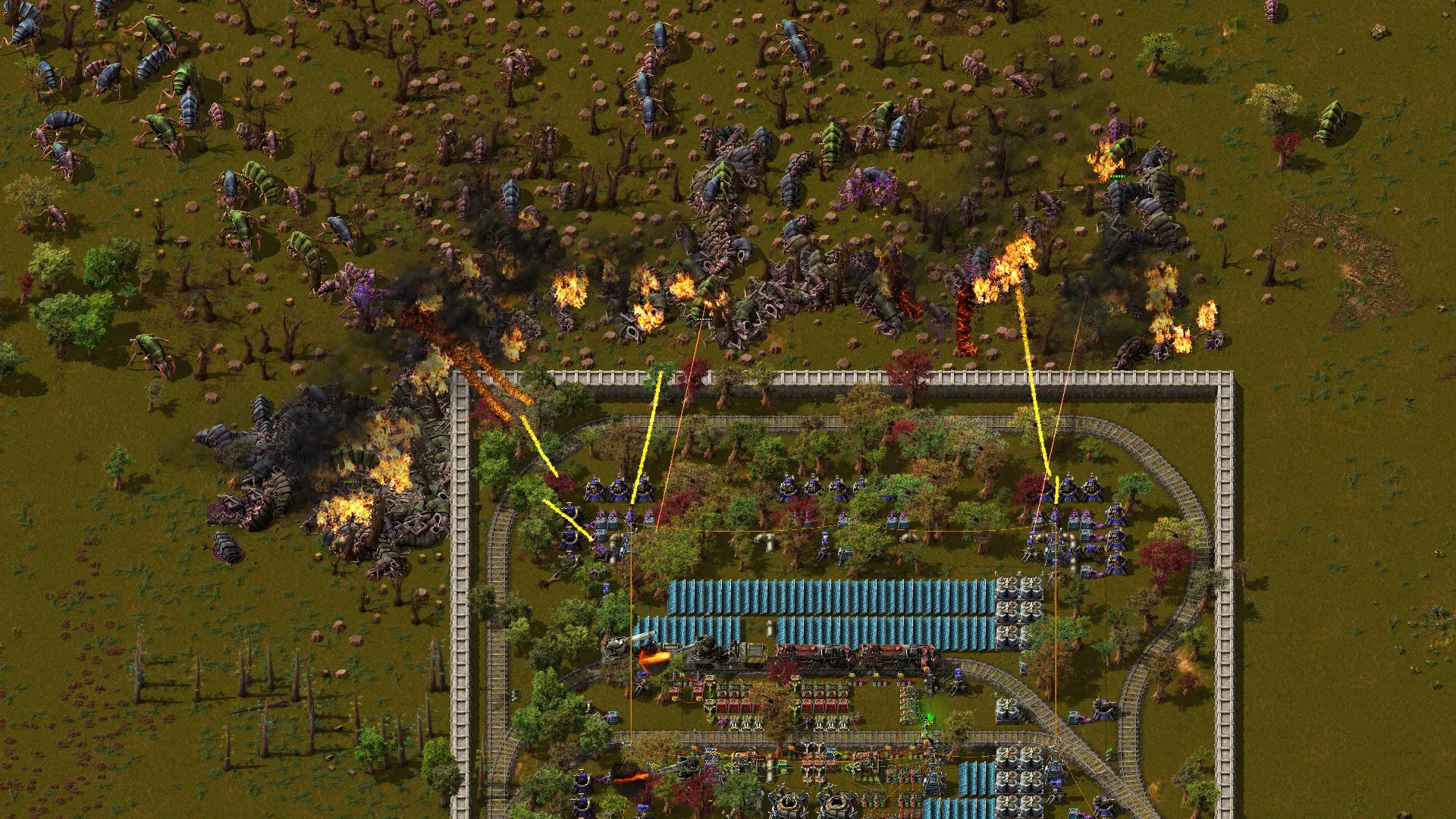
Industrial output generates pollution.
Pollution attracts hostile native species.
Externalized cost
Expansion produces ecological backlash.
Logistics extend beyond production lines into defensive planning.
6. Bus Architecture and Organizational Strategy
As factories grow, ad hoc layouts fail.
Players adopt structured “main bus” systems to standardize material flow.
Macro-structural planning
Design shifts from reactive fixes to anticipatory architecture.
The player begins thinking in scalable templates.
7. Trains and Long-Distance Resource Networks
Resource patches deplete.
Rail systems become essential for transporting materials across vast maps.
Network optimization
Signals, stations, and schedules introduce traffic logic.
Logistics evolve from linear belts to distributed infrastructure.
8. Circuit Networks and Conditional Automation
Advanced players integrate logic circuits.
Production lines activate or deactivate based on thresholds.
Programmable factories
Automation transcends mechanical repetition and enters algorithmic territory.
The factory becomes semi-autonomous.
9. Megabase Scaling and Throughput Mathematics
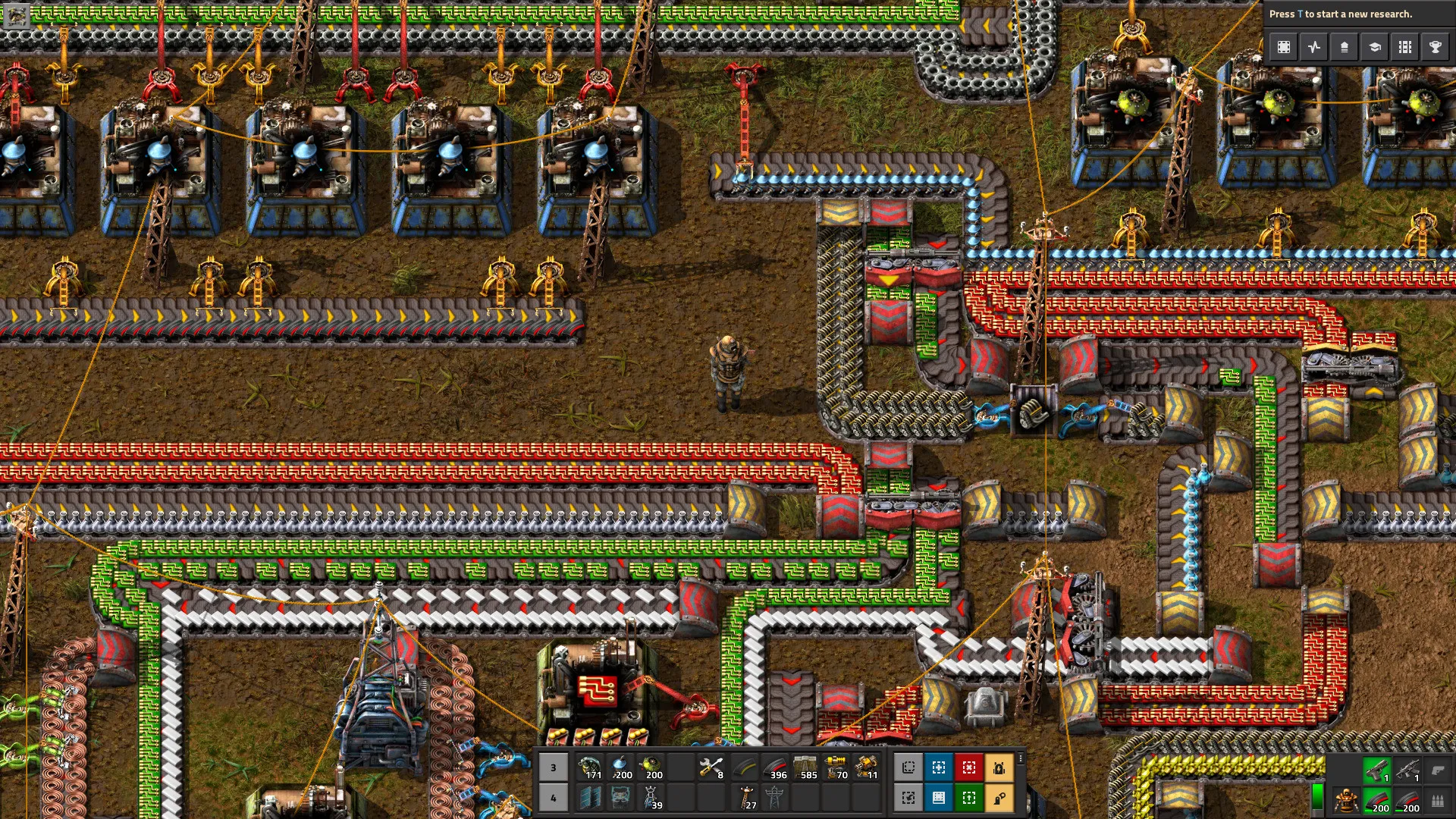
Late-game production targets require astronomical output.
Rocket parts demand balanced, high-volume supply chains.
Quantitative escalation
Players must calculate ratios precisely.
Minor inefficiencies compound dramatically at scale.
10. Why Friction Must Persist
If bottlenecks disappeared, engagement would collapse.
Factorio’s longevity depends on perpetual logistical tension.
Even optimized systems eventually encounter new constraints—resource distance, expansion limits, or throughput ceilings. Friction regenerates at higher complexity tiers, sustaining cognitive demand indefinitely.
Conclusion
Factorio’s brilliance lies not in automation itself, but in how it engineers friction as an endless source of problem-solving stimulus. Each layer of infrastructure introduces new dependencies, ensuring that expansion multiplies complexity rather than simplifying it. Conveyor belts, power grids, trains, and circuits are not merely tools—they are evolving arenas for analytical refinement.
By transforming inefficiency into visible, solvable puzzles, Factorio creates a gameplay loop rooted in continuous optimization. Mastery is not achieved through combat prowess or narrative completion, but through increasingly elegant system design. In this way, Factorio stands as a definitive example of how structured logistical friction can sustain engagement far beyond traditional progression arcs.