.webp)
Satisfactory: 10 Pro Tips to Build a Mega Factory
Introduction
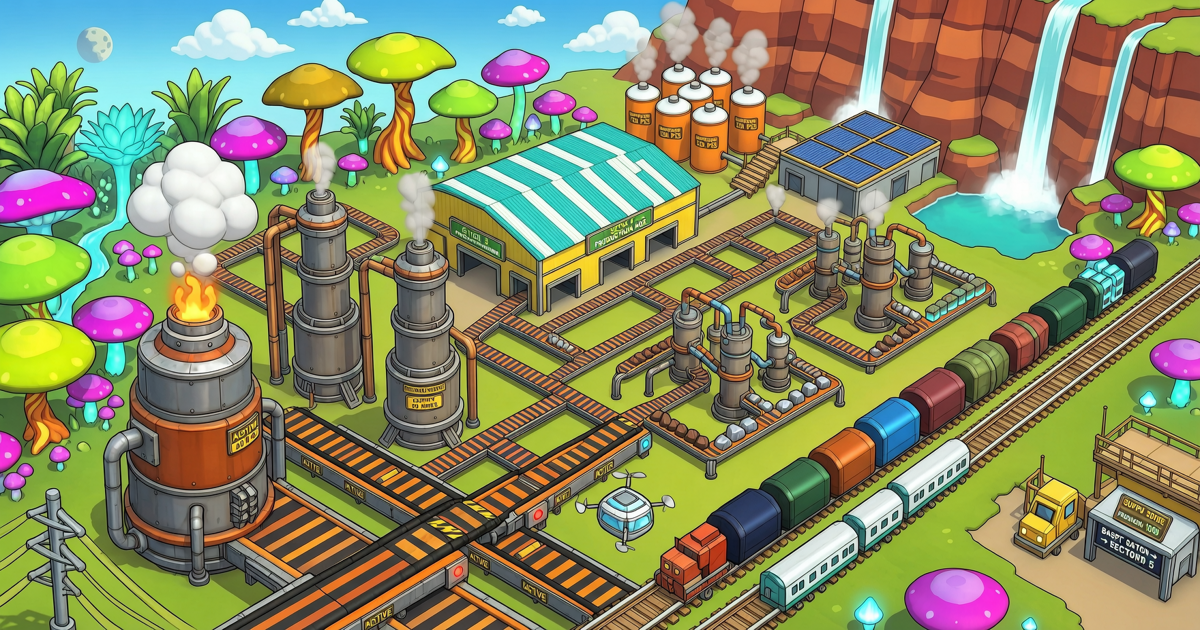
Welcome to Satisfactory, FICSIT Inc.'s premier alien-planet exploitation simulator. Whether you're just automating Iron Ingots or planning a 10,000-parts-per-minute behemoth, you've likely discovered that crafting a truly epic factory takes more than stacking splitters and mergers. The world is beautiful, but it's also a hostile place for a lone engineer. These ten pro tips will help you plan and lay down a production empire that would make any Efficiency Engineer proud. From clever manifold setups to the magic of vertical space, here's how to build like a veteran.
1. Master Manifold Feeding Systems
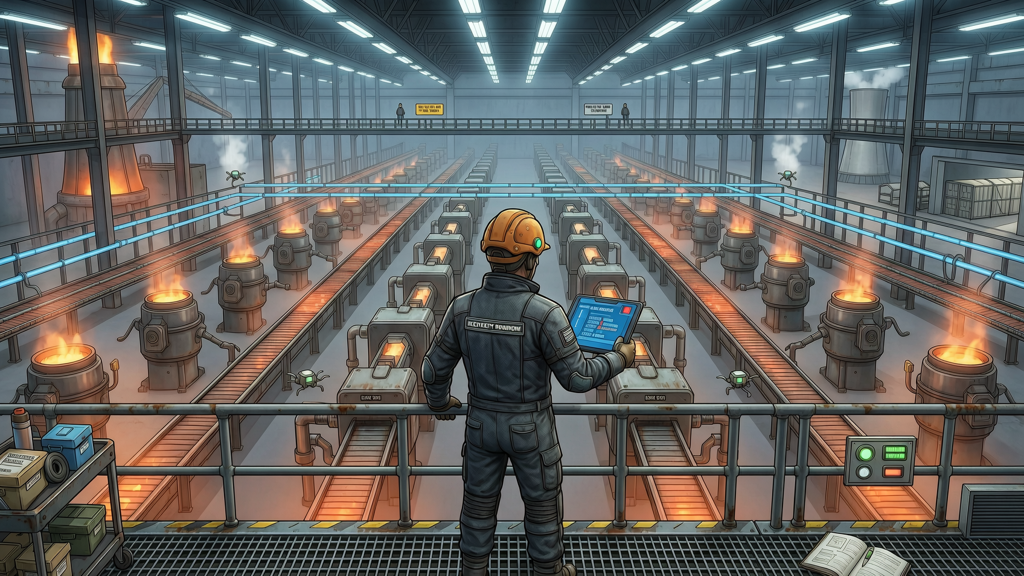
Balancers (splitter-merger networks) are popular, but they become a headache as you scale. Instead, embrace manifolds: split a single belt into machines using successive splitters. The first machines fill up quickly, but the rest will saturate over time. This saves space and reduces belt complexity. The only catch is the initial start-up lag—let it run while you build elsewhere. For high-volume recipes, a load balancer may still shine, but for most production lines, manifolds are your friend.
2. Embrace Foundation Grids and Verticality
Building directly on cliffs or sand is easy early on, but it turns into a nightmare when you try to expand. Always snap your factories to foundations. They provide a clean, level grid that lets you stack floors vertically. Instead of spreading outwards, go upwards. A one-lane conveyor bus on a foundation floor can fit dozens of belts, and you can route pipes and hyperloops beneath. Vertical stacking keeps your footprint small and your organization clean.
3. Scout the Biome Before You Stake a Claim
Your starting location isn't your endgame spot. You'll need iron, copper, limestone, coal, and eventually quartz, sulfur, bauxite, and uranium. Before building a mega base, scout the map for a location with several pure nodes nearby. The Northern Forest is a classic for late-game builds due to its abundant pure nodes, but any biome with a cluster of resource types works. Later, trains will connect distant outposts, but a central hub that has easy access to raw materials saves hours of beltwork.
4. Use Blueprints to Cut Repetitive Work
Once you unlock the Blueprint Designer, your life changes forever. Design a standard smelter module, a constructor block, or a full power generation room, and paste it with a few clicks. This not only accelerates building but also forces a consistent design language. If one module has a flaw, you fix the blueprint and rebuild. Your mega factory should be just a repeating grid of efficient modules, stitched together by logistical corridors.
5. Centralize Storage with a Smart Sorter
Belts can carry unlimited items, but a disorganized storage room is a logistical black hole. Build a central storage hub early. Use Smart Sorters (unlocked through the Caterium chain) to route different items to dedicated boxes. Label them clearly. This becomes your ''tail'' for every production line, letting you manually collect anything for building, feeding new projects, or crafting ammunition. A well-designed hub eliminates the scavenger hunt that slows down mid-game expansion.
6. Don't Fear Overclocking (and Underclocking)
Overclocking increases power consumption exponentially, not linearly. For high-tier products (like Supercomputers), overclocking one or two machines can save space and reduce per-unit frame impact. Meanwhile, underclocking lets you fine-tune production to match demand exactly, reducing power waste. Use a power calculator (or just math) to set your rates. A factory that runs at 100% efficiency because each machine is clocked precisely is more valuable than a giant array that idles half the time.
7. Harness Trains for Long-Haul Logistics
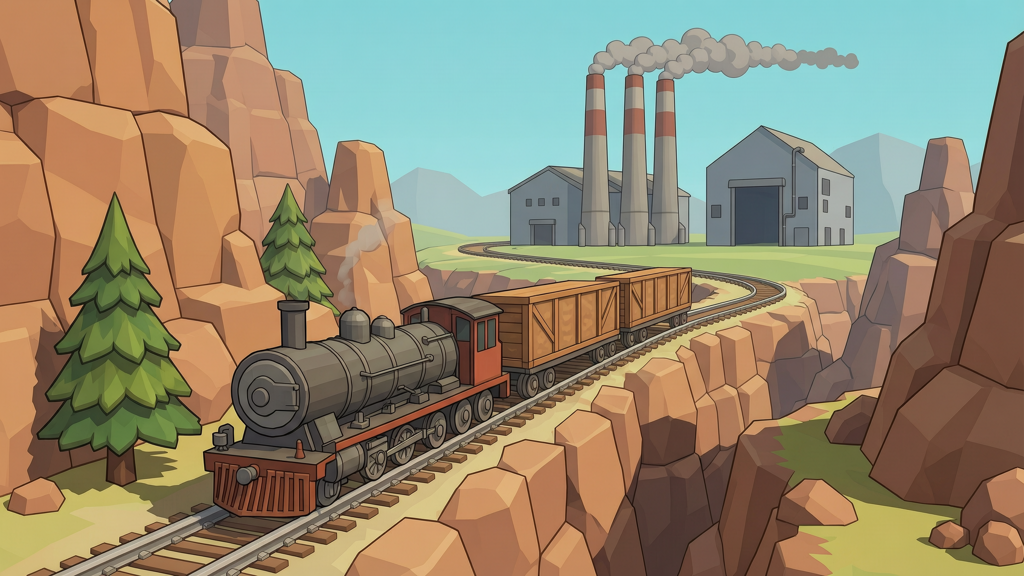
When your resource nodes are kilometers apart, belts and truck paths become unwieldy. Trains are the solution. One train line can move multiple resources if you set up stations and filters. Lay a two-way rail at ground level and let your train negotiate curves. Build stations near node clusters and near your main bus. Trains also carry fluids and passengers, making them the ultimate utility. Even a single train delivering coal to your central power plant can outdo a dozen trucks.
8. Manage Fluid Headlift with Pumps (and Know the Limits)
Fluids are deceptively complex. Every pipeline has a maximum headlift (how high it can push fluid) depending on your pump count. Use a Fluid Pump for every 20 meters of vertical gain, and consider using Pipe Supports to keep lines level. Pro tip: fluids slosh and backflow, so always feed machines from a buffer tank. Finally, don't forget that Packager can turn fluids into packaged items—perfect for trucking or training fuel.
9. Automate Everything (Even If It Seems Slow)
It's tempting to handcraft stacks of screws or plates. Don't. Every minute you spend by a crafting bench is a minute your factory is idle. Automate even minimal production lines for every basic item, from rods to plates, and feed them into your storage hub. You'll thank yourself when you need 200 Reinforced Iron Plates for a milestone. Use Container Trucks for remote resource delivery if trains are too far away, but always aim for full automation.
10. Expand Vertically and Use Logistics Floors
Spaghetti is the enemy of mega factories. Use Logistics Floors—an elevated foundation layer dedicated to belts, pipes, and power lines—while production happens above or below. Each floor can be its own functional zone: smelting on one, assembling on the next, delivering to storage on the top. This keeps walking paths clear and makes product flow logical. If you ever need to expand a line, just add another floor. A factory that ''stacks'' up stays organized and scales beautifully.
Final Thoughts
Building a mega factory in Satisfactory is as much about planning as it is about infrastructure. You'll always be tweaking belts, but by following these tips you inject a layer of order into the chaos. Remember: the planet is your canvas, and your factory is the masterpiece. Efficiency first, but also enjoy the climb—you've got hundreds of hours ahead. Now get out there, Engineer, and make FICSIT proud.